

Zentangle Patterns for Beginners

Zentangle patterns for beginners are a calm, simple way to make detailed art with just a pen and a small square of paper. You draw one repeated pattern at a time, stroke by stroke, without planning the end result. This Haanz Art Guide explains the method, shows six easy patterns, and lists the pens and paper you need.
What is the Zentangle method?
The method breaks drawing into small, repeated strokes called “tangles”. You do not need any drawing skill. Each pattern uses only dots, lines, curves and simple shapes. Many people find it relaxing, and teachers use it to help students focus. It also trains a steady hand, which helps with all other drawing.
The traditional tile is a small square of thick paper, about 9cm across. A small size means you can finish a piece in 15 to 30 minutes.
What you need
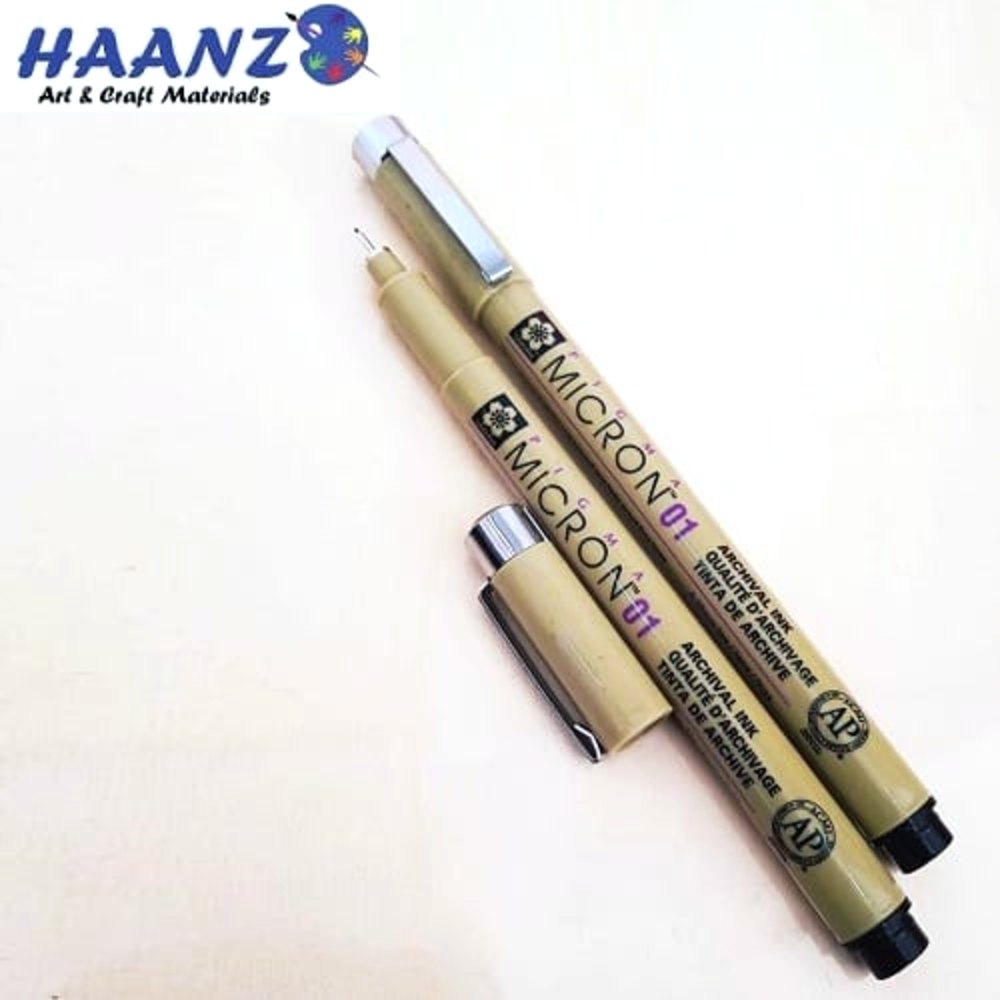
- A fine pen. The Sakura Pigma Micron 01 (0.25mm) is the classic choice for tangles.
- A finer pen for tiny details, such as the Sakura Pigma Micron 005 (0.20mm).
- A thicker pen for bold fills, like the Sakura Pigma Micron 05 (0.45mm).
- Thick, smooth paper. Cut squares from Conqueror Paper White, A5, 260gsm. One A5 sheet gives you two tiles.
- A Graphite Drawing Pencil in HB or 2B for the border and shading.
- A Art Nation Paper Stumps, 3 pcs pack to soften pencil shading.
See all our fineliners in Drawing Pens. Prices change, so see each product page for today’s price.
Zentangle patterns for beginners: step by step
- Dots. With the pencil, make a small dot in each corner of your tile.
- Border. Join the dots with light, slightly wobbly pencil lines to make a frame.
- String. Draw a loose pencil line or a curvy “Z” shape inside the border. This divides the tile into sections.
- Tangle. Pick up your pen. Fill each section with a different pattern. Do not draw over the pencil string; let the patterns meet at it.
- Shade. Add a little pencil shading along the edges of sections and under shapes. Blend it with a paper stump. This makes the pattern look raised.
- Sign. Add your initials on the front and the date on the back.
There are no mistakes. If a line goes wrong, turn it into part of the pattern.
Six easy patterns to start with
1. Lines and stripes
Fill a section with parallel lines. Fill alternate stripes with solid black for a bold look.
2. Grid with dots
Draw a grid of crossing lines. Put a dot in each square, or fill every second square black like a chessboard.
3. Pearls
Draw small circles touching each other in a row. Add a tiny highlight curve inside each, then fill the gaps with black.
4. Waves
Draw rows of curved “C” shapes, each row sitting inside the one before. It looks like scales or waves on the sea.
5. Leaves
Draw a curved line, then add leaf shapes on both sides. Draw a centre vein in each leaf.
6. Spirals
Draw spirals of different sizes. Fill the space between them with tiny dots, which is called stippling.
Tips for neater tangles
- Turn the tile as you work, so your hand is always in a comfortable position.
- Draw slowly. Speed causes shaky lines.
- Mix busy and simple patterns. Leave some areas lighter so the eye can rest.
- Let the ink dry before shading, especially in humid weather, to avoid smudges.
- Keep a small notebook of every pattern you learn, with step-by-step drawings of each stroke.
- For colouring practice with similar designs, try the Fujin Mandala Colouring Book 01, A5.
Enjoyed this? Try Mandala and Dot Art for Beginners, Ink Drawing for Beginners and Hatching, Cross-Hatching and Stippling with Fineliners.
Frequently asked questions
Can I use a normal ballpoint pen?
You can practise with one, but fineliners give an even, dark line that does not blob. Pigma ink is also waterproof once dry, so you can add watercolour later.
Is Zentangle good for children?
Yes. Older children enjoy it, and it builds patience and pen control. Start them on a bigger square with a thicker pen.
Do you deliver islandwide?
Yes. We deliver across Sri Lanka in 2–5 working days, with cash on delivery, card or bank transfer. You can also visit our shops in Boralesgamuwa and Horana, open every day from 9 AM to 6 PM.
Not sure what to choose? Call / WhatsApp the Haanz team on 0711 515 515 and we’ll help you choose fineliners and paper for pattern drawing.
More Haanz Art Guides
 How to Draw Hands: A Beginner’s GuideRead the guide →
 Nature-Themed Resin Moulds: Leaves, Shells, Palms and RosesRead the guide →
 Watercolour Paper Guide: GSM, Cotton and Which Paper to ChooseRead the guide →
 Hand Lettering for Beginners: Brush Pens and Basic StrokesRead the guide →
