

How to Measure and Mix Epoxy Resin Correctly

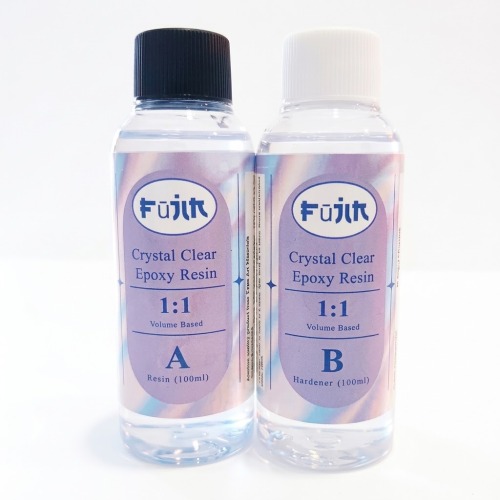
Most resin problems, like sticky spots, soft patches and cloudy pieces, start at the mixing cup. Learning how to mix epoxy resin correctly is the single most useful resin skill you can build. This Haanz Art Guide shows you how to measure resin and hardener accurately, how long and how gently to stir, how much to mix for your mould, and how to avoid the common mistakes we hear about from customers across Sri Lanka.
Why the mixing ratio matters
Epoxy resin comes in two parts: the resin (often called Part A) and the hardener (Part B). When you mix them, a chemical reaction starts and the liquid slowly turns solid. The reaction only works fully when the two parts are in the right balance. Too much of either part leaves some of it unreacted, and that is what causes soft, bendy or tacky resin.
Most craft epoxies are 1:1 or 2:1 by volume – always follow your pack. Some brands measure by weight instead, so read the label before you start. For example, FUJIN 1:1 Crystal Clear Epoxy Resin 100ml+100ml uses an easy 1:1 ratio by volume, which means equal amounts of resin and hardener measured in the same cup. Adding extra hardener will not make resin cure faster. It only makes the result weaker.
What you need
- FUJIN 1:1 Crystal Clear Epoxy Resin 100ml+100ml for small projects, or FUJIN 1:1 Crystal Clear Epoxy Resin 500ml+500ml for trays and bigger pours.
- Epoxy Mixing Cup with clear measuring lines, so both parts are measured the same way.
- Epoxy Resin Tool Set with droppers and small spoons for tiny amounts and colours.
- Silicone Mixing Stick and Silicone Spatula to stir and scrape the cup clean. Cured resin peels off, so you can reuse them.
- Nitrile gloves, a plastic sheet to protect your table, paper towels and a timer.
You can find more cups and stirrers in Other Resin Materials and all our resins in Epoxy Resins, UV Resins. Prices change, so see each product page for today’s price.
How to mix epoxy resin, step by step
- Prepare your space. Work in a room with good ventilation, cover the table and wear gloves. Keep children, pets and food away from the work area.
- Read the pack. Check the mix ratio, the working time and the cure time printed by the maker. Every resin is a little different.
- Measure Part A. Stand the cup on a flat surface and pour the resin to your chosen line. Check the level at eye height, not from above.
- Measure Part B. For a 1:1 resin, add the same amount of hardener. If you use two separate cups, scrape each one out completely with the spatula.
- Stir slowly for about 3 minutes. Move the stick in slow circles and figure-of-eight shapes. Scrape the sides and the bottom of the cup often, because unmixed resin hides there.
- Check the mix. Streaks or swirly lines mean it is not mixed yet. Keep stirring until the resin looks even and clear.
- Add colour now, if using. Stir in a little pigment, such as Mica Powder Small Bottle, and mix again.
- Pour and pop bubbles. Pour within the working time. Pass a heat gun such as the Electric Heatgun -300W quickly over the surface to lift bubbles. Keep it moving and never hold it in one spot.
How much resin should you mix?
To find out how much your mould holds, fill it with water, then pour the water into your measuring cup and read the line. Add a little extra for spills, then dry the mould completely, because water spoils resin. Mix only what you can pour in the working time. For a first project, small batches are easier to control than one big cup.
Tips for mixing resin in Sri Lankan weather
- Heat speeds up the reaction. On a hot afternoon your working time can be shorter than the pack says, so mix smaller amounts and pour quickly.
- If the resin looks thick on a cool, rainy day, stand the closed bottles in a bowl of warm water for a few minutes before measuring.
- Humidity can cause cloudy or dull surfaces. Work in a dry room and keep the lids tightly closed between uses.
- Do not leave mixed resin standing in a deep cup. A large mass of mixed resin heats up fast and can start to set in the cup.
For more help, read our Resin Safety Guide, Resin Problems: Bubbles, Sticky and Cloudy Resin and Resin in Hot, Humid Weather.
Frequently asked questions
Why is my resin still sticky after two days?
Sticky resin usually means the ratio was off or the resin was not mixed long enough. Sticky areas rarely harden later. Scrape off the soft resin, clean the area and pour a fresh, carefully measured layer.
Can I measure resin with kitchen spoons?
It is safer to use cups and spoons kept only for resin, and never reuse them for food. Measuring cups with clear lines give more accurate results than spoons for anything larger than a few drops.
Do you deliver islandwide?
Yes. We deliver across Sri Lanka in 2–5 working days, with cash on delivery, card or bank transfer. You can also visit our shops in Boralesgamuwa and Horana, open every day from 9 AM to 6 PM.
Not sure what to choose? Call / WhatsApp the Haanz team on 0711 515 515 and we’ll help you pick the right resin size and mixing tools for your project.
More Haanz Art Guides
 Sable Brushes Explained: Round, Flat and FilbertRead the guide →
 Poster Design for School Competitions: Layout, Lettering and ColourRead the guide →
 Resin Bags and Handles: Bag Crafting and Handle MouldsRead the guide →
 Setting Up a Home Art CornerRead the guide →
