

Sable Brushes Explained: Round, Flat and Filbert

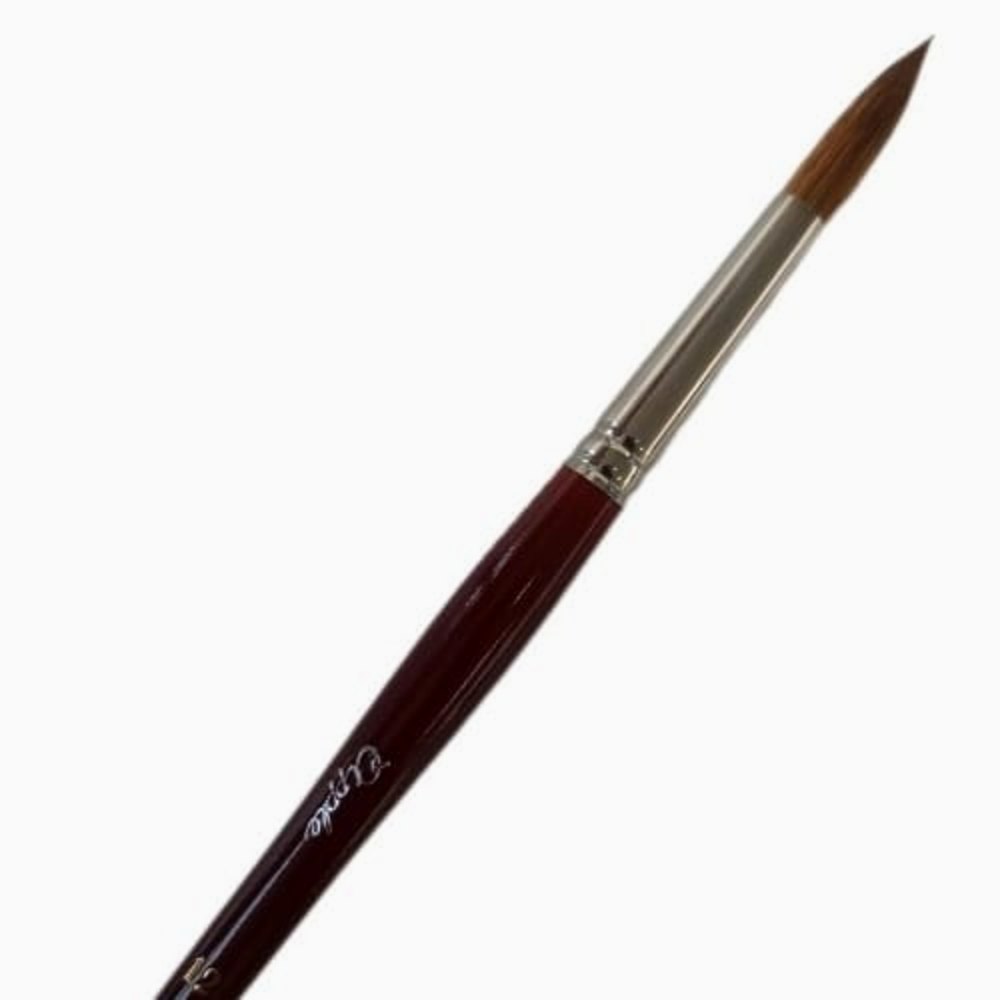
A sable brush is the brush many watercolour painters dream about. Sable-type hair holds lots of paint and water, releases it smoothly and springs back to a fine point. This Haanz Art Guide explains what makes sable brushes special, which shapes we stock for watercolour and oil, and how to look after them so they last.
Why sable-type hair is different
Synthetic brushes are springy and tough, but they hold less water. Sable-type hair has tiny scales and a belly that soaks up paint, so one dip can paint a long, even stroke. The tip comes to a sharp point, which means a single round brush can paint a hairline and a wide stroke depending on pressure.
That makes sable brushes ideal for:
- Watercolour washes and glazes.
- Fine lines, lettering and botanical detail.
- Smooth blending in oil painting.
Sable brushes for watercolour and gouache
Fine red sable rounds. Pointed round brushes for washes and lines:
- Apple Fine Red Sable Brush (236), size 12 and size 5: a large and a medium round for washes and general painting.
- Crimto Fine Red Sable Brush (236), size 5/0 and size 10/0: extra-fine tips for miniatures, eyelashes and botanical detail.
Watercolour sable flats and filberts:
- Watercolour Sable Brush Flat 10 and Flat 4: square tips for clean edges and even coverage.
- Watercolour Sable Brush Filbert 3: a rounded flat tip that softens edges, lovely for petals and leaves.
- Lakaruchi Pure Sable Flat Brush 14: a large flat for bold strokes and wide washes.
Sable brushes for oil colour
Sable is also used for smooth, detailed oil painting:
- Oil Colour Sable Brush Round 0 and Round 3: for fine lines, eyes, highlights and signatures.
- Oil Colour Sable Brush Filbert 2 and Filbert 6: for soft blending and rounded forms such as faces.
Keep oil sable brushes separate from your watercolour brushes. Oil and solvent residue can affect watercolour washes.
See more in Brushes for Watercolours and Acrylics and Brushes for Oil Colours. Prices change, so see each product page for today’s price.
Which shape do you need?
- Round: the most useful single brush. A size 5 to 8 round covers most watercolour work.
- Flat: for straight edges, buildings, skies and washes.
- Filbert: for petals, leaves, soft edges and blending.
- Extra-fine (5/0, 10/0): for tiny details only. Don’t use them for filling.
If you buy only two, choose a medium round and a small round. Add a flat when you start painting skies and buildings.
Sable vs synthetic
- Sable-type: holds more water, softer strokes, finer point. Needs gentle care.
- Synthetic: tougher, easier to clean, good with acrylic and for scrubbing.
Many painters keep sable brushes for watercolour and use synthetics for acrylic. For a full comparison, read Watercolour Brushes and Oil Painting Brushes.
How to care for sable brushes
- Rinse in clean water during painting. Never leave a brush standing on its tip.
- Wash with mild soap and lukewarm water after painting.
- Gently reshape the tip with your fingers.
- Dry lying flat or with the tip pointing up.
- Store dry brushes in a box or brush roll so the tips aren’t crushed. Keep them away from damp and insects.
- Don’t use sable brushes with acrylic unless you wash them immediately. Dried acrylic ruins fine hair.
Our brush cleaning guide has more detail.
Frequently asked questions
What does 5/0 or 10/0 mean?
These are very small sizes. The bigger the first number, the finer the brush, so 10/0 is finer than 5/0.
Are sable brushes worth it for beginners?
One good sable round is a great upgrade once you know you enjoy watercolour. Beginners can start with synthetic and add sable later.
Do you deliver islandwide?
Yes. We deliver across Sri Lanka in 2–5 working days, with cash on delivery, card or bank transfer. You can also visit our shops in Boralesgamuwa and Horana, open every day from 9 AM to 6 PM.
Not sure what to choose? WhatsApp the Haanz team on 0711 515 515 and we’ll help you choose a sable brush.
More Haanz Art Guides
 Drawing Paper Guide: Ivory, Conqueror, Sketch and Tracing PaperRead the guide →
 Acrylic Inks for Beginners: Bright, Fluid ColourRead the guide →
 Watercolour Brushes: Rounds, Mops, Flats and Water BrushesRead the guide →
 Shimmer Spray Dyes for Paper Craft and Mixed MediaRead the guide →
