

How to Fix Watercolour Mistakes

Watercolour has a reputation for being unforgiving, but many problems can be softened, lifted or hidden if you know what to do. Learning how to fix watercolour mistakes takes away a lot of the fear, so you can paint more freely. This Haanz Art Guide covers the most common watercolour problems, the quick fixes that work, and the habits and supplies that help you avoid them next time.
First rule: stop and let it dry
Most watercolour mistakes get worse when you rush to fix them while the paper is damp. Scrubbing wet paper can damage the surface and spread the problem. Unless you are lifting a fresh drip, put the brush down, let the area dry completely, then decide what to do.
How to fix watercolour mistakes: 8 common problems
- Too much colour or a dark blob. While still wet, press a clean, dry tissue on it to soak up the extra paint. If it has dried, wet the area gently with a clean, damp brush, wait a few seconds and blot with a tissue. Repeat slowly. This is called lifting.
- Blooms or “cauliflowers”. These happen when wetter paint runs back into a drying wash. Once dry, soften the edge by lifting it with a damp brush, or turn it into something else, such as a cloud, a bush or a texture in the foreground.
- Hard, unwanted edges. Run a clean, damp brush along the edge and blot with a tissue. Next time, keep a wet edge as you paint by working quickly across the area.
- Muddy, dull colours. Usually caused by mixing too many colours or painting over a damp layer. Lift what you can, let it dry and glaze a clean, transparent colour over the top. Next time, mix only two or three colours and change your rinse water often.
- Lost white areas. Lift the colour back as much as possible. For small highlights, such as sparkles on water or light in an eye, add white at the end with a white gel pen or a little opaque white poster colour.
- Buckled or wavy paper. Thin paper swells when wet. Tape the paper down on a board before painting. Once a painting is dry, you can flatten it under heavy books for a day or two.
- A drip in the wrong place. Touch the corner of a tissue to it straight away, without rubbing. If it has dried, lift it with a damp brush.
- Pencil lines showing through. Watercolour seals pencil into the paper, so erase before you paint. Roll a kneaded or soft eraser over the sketch to lighten it before you start.
Supplies that make fixing easier
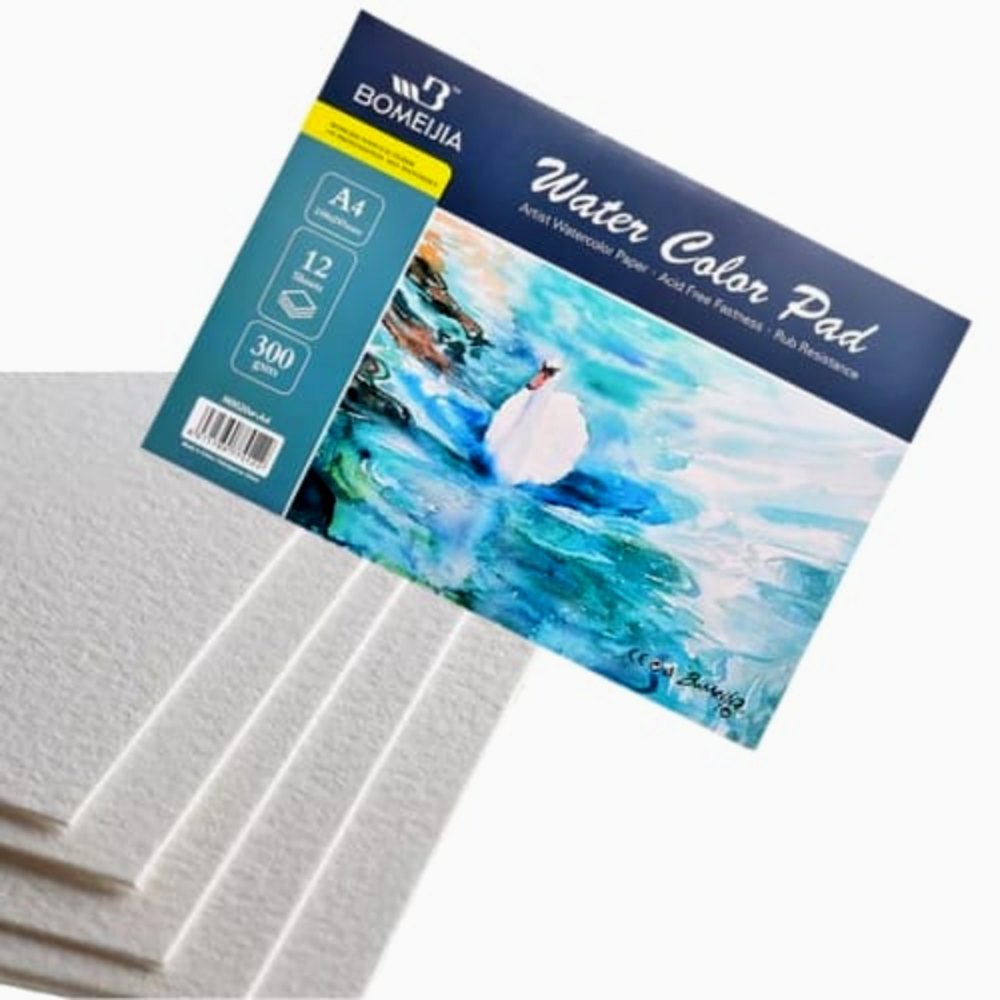
- Heavier paper: thick paper copes better with lifting and rewetting. Try the Bomeijia W/C pad 300GSM A4 or, for larger work, the Fabriano Artistico Paper 56 x 76cm 300gsm, a cotton watercolour paper.
- Small round brush for lifting: a Apple Fine Red Sable Brush (236) size 2 lets you lift tiny areas with control.
- White for highlights: the Sakura White Gelly Roll 05 (Fine Tip) for small sparkles, or Pentel Poster Colour 30ml White for opaque white touches.
- Tape: Nyoni Artist Masking Tape is low-tack and holds paper flat while it dries.
- Paint: a reliable set like Mont Marte Watercolour 12 x 12ml with generous tubes, so you can mix full washes.
- Palette: a Mixing Tray 14 Holes Oval Shape keeps colours separate and clean.
Browse more in Drawing Papers For Watercolours and Watercolours. Prices change, so see each product page for today’s price.
Habits that prevent watercolour mistakes
- Test first. Keep a scrap of the same paper beside you and try each mix before it goes on the painting.
- Plan your whites. Decide where the lightest areas will be before you start, and paint around them.
- Work light to dark. It is easy to add more colour, but hard to take it away.
- Watch the shine. Very shiny paper is wet; a soft sheen is damp; no shine is dry. Each stage behaves differently, so learn to read it.
- Allow extra drying time in humid weather. In Sri Lanka’s rainy seasons paper stays damp longer. Test with the back of your finger: if it feels cool, it is not dry yet.
When to start again
Sometimes a painting is a useful practice sheet rather than a finished piece. If the paper surface is rough and pilling from scrubbing, a fix will rarely look good. Keep the painting, note what went wrong and paint it again. The second version is almost always better, because you already know the route.
For core skills, see Watercolour Techniques for Beginners and the Watercolour Paper Guide. To stop paper buckling, read How to Stretch and Tape Watercolour Paper.
Frequently asked questions
Can I completely erase watercolour?
Not completely. Some colours stain the paper and will leave a faint mark even after lifting. Lifting works well for lightening areas, but it rarely brings the paper back to pure white.
Can I paint over a watercolour mistake with more watercolour?
Yes, with a darker colour. Watercolour is transparent, so a lighter colour will not cover a darker one. For small light spots, use opaque white at the end.
Do you deliver islandwide?
Yes. We deliver across Sri Lanka in 2–5 working days, with cash on delivery, card or bank transfer. You can also visit our shops in Boralesgamuwa and Horana, open every day from 9 AM to 6 PM.
Not sure what to choose? Call / WhatsApp the Haanz team on 0711 515 515 and we’ll help you choose watercolour paper and brushes that make painting easier.
More Haanz Art Guides
 White Gel Pens: How to Add Highlights to Your DrawingsRead the guide →
 Glass and Rock Painting for Beginners: Paints and PensRead the guide →
 Paper for School Projects: A1 Sheets, Poster Paper and Colour PacksRead the guide →
 How to Draw a Landscape in PencilRead the guide →
