

Oil Painting Brushes: Bristle, Sable and Synthetic Explained

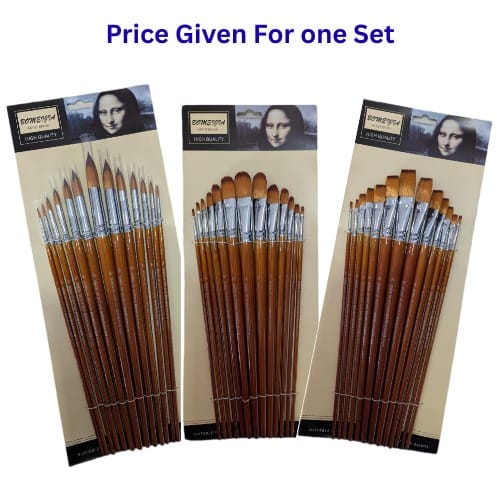
Oil paint is thick and buttery, so it needs brushes that can push it around. This guide to oil painting brushes explains the hair types (bristle, sable and synthetic), the four shapes you will use most, why oil brushes have long handles, which sizes to start with, and how to clean brushes after oil painting.
Hair types for oil painting
- Bristle (hog hair): stiff, springy hair that holds thick paint and leaves visible brush marks. The classic choice for oils, especially for blocking in and textured strokes.
- Sable: soft, smooth hair for blending, glazing and fine detail, leaving fewer brush marks.
- Synthetic: durable and easy to clean, available in firm and soft versions. A good all-round choice for oil and acrylic.
Brush shapes
- Flat: square end for bold strokes, straight edges and covering areas.
- Filbert: flat with a rounded tip; softer edges, ideal for blending and portraits. Many oil painters use filberts most.
- Round: pointed tip for lines, details and small areas.
- Fan: for foliage, grass and soft blending. See our detail and fan brushes guide.
Why long handles?
Oil brushes usually have long handles so you can paint standing at an easel, an arm’s length from the canvas. Holding the brush further back gives looser, more confident strokes and lets you see the whole painting.
Oil painting brushes we stock
- Apple bristle brushes (sold individually): flats (140F) in sizes 2, 4, 6, 8 and 12; filberts (140KF) in 2, 4, 6 and 8; rounds (140R) in 2, 4 and 6.
- Sable flats for oil: size 2, 4 and 6 for smooth blending and glazes.
- Long-handled synthetic brushes for oil and acrylic: Long Handle Flat, Long Handle Filbert and Long Handle Round, sizes 0 to 24.
- Sets: the Bomeijia Long Handle Brush 13 pcs in round, flat or filbert.
Prices change, so see each product page for today’s price. Browse all brushes for oil colours.
Which sizes to start with
A small, medium and large brush is enough to start: for example a size 2 round for details, a size 6 filbert for general painting and a size 10 or 12 flat for backgrounds. Use the largest brush you can for each stage; small brushes too early lead to fussy paintings. Our paint brush shapes and sizes guide explains how numbering works.
How to hold an oil brush
For loose, broad strokes, hold the brush near the end of the handle, like a baton, and move from your shoulder. For details, hold it closer to the hairs, like a pencil. Switching between the two grips as you paint gives you both energy and control.
Cleaning brushes after oil painting
- Wipe as much paint as possible off on a rag or newspaper.
- Rinse in a little turpentine or brush cleaner, working the bristles gently against the jar.
- Wipe again, then wash with mild soap and lukewarm water, working lather into the base of the hairs.
- Rinse until the water runs clear, reshape the tip and dry flat or bristles-up.
Our oil colours for beginners guide covers solvents and safety.
Frequently asked questions
Can I use the same brushes for oil and acrylic?
Synthetic brushes work for both, but keep separate brushes once used for oil; leftover oil can affect acrylic.
Why are my bristle brushes splaying?
Usually from paint drying in the base of the hairs or from scrubbing. Clean thoroughly and avoid leaving brushes standing in solvent.
Do I need expensive brushes?
No. A few well-chosen bristle and synthetic brushes are enough to learn. Look after them and they will last.
Do you deliver islandwide?
Yes. We deliver across Sri Lanka in 2–5 working days, with cash on delivery, card or bank transfer. You can also visit our shops in Boralesgamuwa and Horana, open every day from 9 AM to 6 PM.
Not sure what to choose? WhatsApp the Haanz team on 0711 515 515 and we’ll help you choose oil painting brushes.
More Haanz Art Guides
 White Gel Pens: How to Add Highlights to Your DrawingsRead the guide →
 Acrylic Pouring for Beginners: Paints, Medium and TechniquesRead the guide →
 Resin Safety: How to Work with Epoxy and UV Resin SafelyRead the guide →
 Neon Paint and Glow Face Paint: Bright Colours for Art and PartiesRead the guide →