

Liner, Angular, Stencil and Wide Brushes: Special Brushes Explained

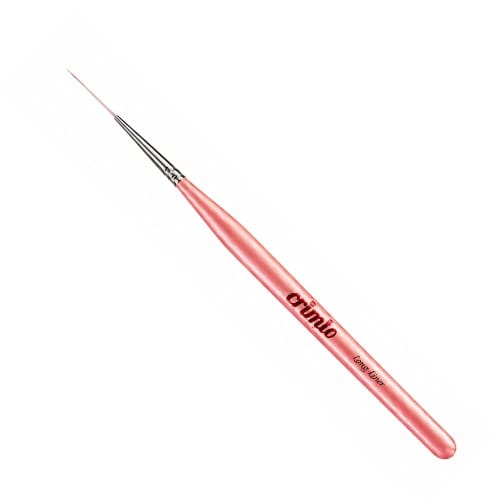
Most paintings are made with rounds and flats, but a few special brushes make certain jobs much easier. A liner brush paints long, thin lines; an angular brush cuts neat curves; a stencil brush dabs paint cleanly through a stencil; and a wide flat covers walls and backgrounds fast. This Haanz Art Guide explains these special brushes and when to reach for them.
Liner and detail brushes
A liner (sometimes called a rigger) has long, thin hair that holds a lot of paint, so you can pull a fine, continuous line without reloading.
- Crimto Detail Brush, Long Liner: for very long lines such as ship rigging, grass blades, branches, hair and lettering.
- Crimto Detail Brush, Short Liner: easier to control for shorter lines, outlines and signatures.
- Crimto Detail Brush, Round: a fine, precise tip for small details.
All three are synthetic and suit acrylic, watercolour and poster paint.
How to use a liner: thin your paint with a little water to an inky consistency, load the whole brush, hold it near the end of the handle and pull smoothly. Thick paint won’t flow from a liner.
Angular brushes
The KeepSmiling Angular Brush has an angled, slanted tip for sharp edges and curved strokes. It comes in sizes 2, 4, 6, 8, 10 and 12.
Use an angular brush for:
- Petals and leaves in one stroke.
- Cutting in clean edges around shapes.
- Corners in buildings and letters.
- One-stroke and decorative painting.
Stencil brushes
Stencil brushes have short, dense, flat-topped heads. The Crimto White Bristle Stencil Brush, Large, Medium and Small have firm white bristles made for dabbing paint straight down through a stencil.
How to stencil cleanly:
- Load only a little paint, then dab off the extra on a paper towel. A nearly dry brush gives the crispest edges.
- Hold the brush upright and dab straight down (stippling), or swirl in small circles.
- Build colour in light layers rather than one thick coat.
- Lift the stencil straight up while the paint is still slightly wet.
Stencil brushes are also handy for stippling textures such as foliage, fur and sponge-like effects.
Wide flat brushes for big areas
The Flash Dupont Brush is a wide flat brush in widths of 1, 1.5, 2, 2.5, 3 and 4 inches. Use it for backgrounds, gesso, varnish and murals, where a normal artist brush would leave streaks and take far too long.
Tip: apply varnish and gesso in long, even strokes in one direction, and keep a separate wide brush only for varnish so it stays clean.
See these and more in Other Brushes. Prices change, so see each product page for today’s price.
Building a useful brush kit
A practical kit for most painters:
- One large flat and one medium round (your everyday brushes).
- One liner for lines.
- One angular for edges and curves.
- A stencil brush if you do craft or decorative work.
- A wide flat for priming and varnishing.
For the basic shapes, see Paint Brush Shapes and Sizes, and for very fine work see Detail Brushes and Fan Brushes.
Frequently asked questions
Why does my liner brush leave broken lines?
The paint is too thick or the brush isn’t fully loaded. Thin the paint and load the whole length of the hair.
Can I use a stencil brush with fabric paint?
Yes, dabbing works well on fabric. Use very little paint so it doesn’t bleed under the stencil.
Do I need a different brush for varnish?
Yes. Keep a clean wide flat only for varnish, so old paint doesn’t mix into your clear coat.
Do you deliver islandwide?
Yes. We deliver across Sri Lanka in 2–5 working days, with cash on delivery, card or bank transfer. You can also visit our shops in Boralesgamuwa and Horana, open every day from 9 AM to 6 PM.
Not sure what to choose? WhatsApp the Haanz team on 0711 515 515 and we’ll help you choose special brushes.
More Haanz Art Guides
 Art Supplies for O/L and A/L Art: A Student ChecklistRead the guide →
 White Charcoal on Black Paper: A Beginner GuideRead the guide →
 Handmade Greeting Cards: Easy Card Making Ideas for Any OccasionRead the guide →
 Art Rangers Acrylics: Tubes, Pastels, Neons and SetsRead the guide →
