

White Charcoal on Black Paper: A Beginner Guide

A white charcoal pencil turns drawing upside down. On black paper, you draw the light instead of the shadows, and the results look dramatic with very few lines. It is a popular style for portraits, animals, night scenes and greeting cards. This Haanz Art Guide explains which pencils and papers to use and how to think in reverse.
White charcoal pencils we stock
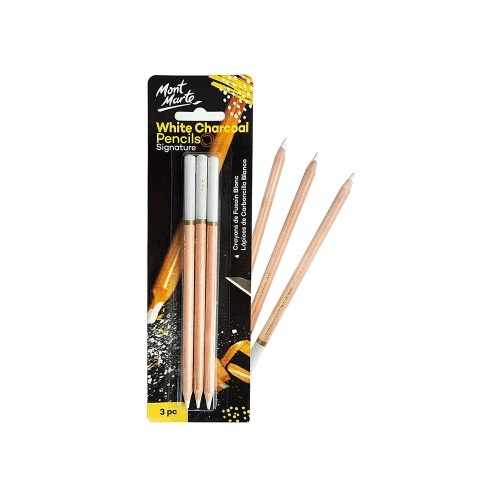
Mont Marte 3 pc White Charcoal Set. Three white charcoal pencils in a range of hardness, from soft to hard. Softer pencils give bright, bold highlights; harder pencils give fine, controlled lines.
Bomeijia White Charcoal Pencil, Medium. A single medium-hardness pencil for highlights on toned and black paper. Handy as a spare or for students who only need one.
Browse more in White Charcoal Pencils.
Black papers for white charcoal
- Derwent Academy Black Paper Pad A4: durable 140gsm black paper for pastels, pencils and light-coloured media. A good all-round choice for white charcoal.
- Derwent Academy Black Paper Pad A3: the same paper in a larger size for portraits.
- Black Card Paper Marker Pad A3: very deep black paper, made for gel pens, metallic and white markers, chalk and pastel.
- Black A4 paper, 100 pack (80gsm): thinner paper for practice, cards and craft.
For practice sketches, the 80gsm pack is fine. For finished drawings, choose a heavier pad so the paper doesn’t buckle or tear when you build up layers. Prices change, so see each product page for today’s price.
How to “think in reverse”
On white paper you add darks. On black paper you add lights. A few simple steps help:
- Find the light source. Decide where the light comes from before you start.
- Sketch lightly. Use a hard white pencil with very light pressure for the outline. Lines are harder to remove on black paper.
- Mark the brightest spots. Eyes, the shine on a nose, the edge of a cheek, the rim of a cup. Add them with a soft pencil.
- Build mid-tones. Use gentle pressure and soft strokes for areas that are only partly lit.
- Leave the paper as shadow. Don’t fill everything. The black paper does the work for dark areas.
Techniques for clean highlights
- Layer gradually. Light pressure first, then more pressure for the brightest spots.
- Blend gently. A paper stump or tortillon softens white charcoal into a glow. Keep a separate stump only for white, or it will pick up grey.
- Keep the pencil sharp for whiskers, hair and reflections.
- Rest your hand on a clean sheet so you don’t smudge white into the black.
- Fix the finished drawing lightly with fixative, because charcoal can rub off.
Mixing with other media
White charcoal works well with:
- Black charcoal on mid-toned paper, for full value range. See Drawing on Toned Paper.
- White gel pens for tiny, extra-bright sparkles. See our white gel pen guide.
- Coloured pencils or pastels for a single colour accent, such as blue eyes on a black-and-white portrait.
Easy subjects to start with
- A candle flame and the glow around it.
- A black cat with bright eyes and whiskers.
- The moon over the sea, with a reflection on the water.
- A glass bottle or marble with strong highlights.
Frequently asked questions
Can I erase white charcoal on black paper?
A little. Lift light marks with a kneaded eraser by pressing and lifting rather than rubbing. Heavy marks are hard to remove, so start lightly.
Is white charcoal the same as white pastel pencil?
They are similar and used in the same way. White charcoal pencils are usually a little drier and chalkier, which helps when layering.
Which paper is better for beginners?
The Derwent Academy black pad is easy to use and strong enough for practice and finished work.
Do you deliver islandwide?
Yes. We deliver across Sri Lanka in 2–5 working days, with cash on delivery, card or bank transfer. You can also visit our shops in Boralesgamuwa and Horana, open every day from 9 AM to 6 PM.
Not sure what to choose? WhatsApp the Haanz team on 0711 515 515 and we’ll help you choose pencils and paper.
More Haanz Art Guides
 How to Make Resin Coasters: A Step-by-Step Beginner ProjectRead the guide →
 Watercolour Brushes: Rounds, Mops, Flats and Water BrushesRead the guide →
 Air Dry Clay for Beginners: Types, Drying Tips and PaintingRead the guide →
 3D Resin Shapes: Spheres, Cubes, Gems and HoneycombRead the guide →
