

Acrylic Inks for Beginners: Bright, Fluid Colour

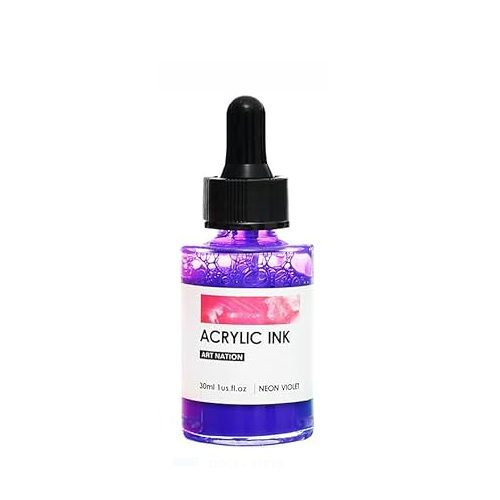
Acrylic ink is acrylic paint in its most fluid form. It flows from a brush, dip pen or dropper like ink, but dries to a water-resistant layer like acrylic paint. The colours are intensely pigmented, so a few drops go a long way. This Haanz Art Guide explains the Art Nation acrylic inks we stock and how to use them.
Art Nation Acrylic Ink, 30ml
Art Nation acrylic inks come in 30ml bottles. They are fluid and highly pigmented, and can be used with a brush, dip pen, dropper or airbrush.
Classic colours
Neon colours
- Neon Violet: a glowing neon violet.
- Neon Pink
- Neon Orange
- Neon Yellow
- Neon Green
- Neon Blue
See them all in Acrylic Colours. Prices change, so see each product page for today’s price.
Acrylic ink vs acrylic paint vs watercolour
- Acrylic paint is thick and creamy. Good for canvas and covering areas.
- Watercolour is transparent and can be re-wetted after drying.
- Acrylic ink is as fluid as watercolour, but once dry it is water-resistant, so you can layer over it without lifting the colour underneath.
Ways to use acrylic ink
With a brush: paint washes like watercolour, but they won’t lift when you add the next layer. Great for illustrations.
With a dip pen: write and draw fine lines in colour. Shake the bottle, dip the nib, and wipe the excess on the bottle neck. See Calligraphy for Beginners.
With the dropper: drop ink onto wet paper and watch it bloom and spread. Tilt the paper to make the colours run together.
In pouring and mixed media: add a few drops to pouring paint or gel for intense colour.
On different surfaces: paper, card, canvas, wood and many craft surfaces. Test first on unusual materials.
Tips for neons
- Neons glow brightest over white paper or a white base.
- Mixing neons with dark colours dulls them, so use them pure for maximum impact.
- Layer a neon over a dry black background only after a white base layer, or the neon will look dull.
Choosing paper for acrylic ink
Fluid ink makes thin paper wrinkle. For washes and dropper work, use watercolour paper of 160gsm or heavier, or a mixed media paper. For pen lines and lettering, a smooth, heavier paper keeps lines crisp and stops the ink from feathering. See Choosing a Watercolour Pad for options.
Mixing your own colours
The classic inks mix like paint. A few useful mixes:
- Orange: Yellow with a little Scarlet.
- Purple: Dark Blue with a little Scarlet.
- Teal: Green with a little Dark Blue.
- Pastels: any colour with White.
Mix in a small dish and test on scrap paper, because ink often dries a little darker.
Cleaning up
Acrylic ink dries quickly and is water-resistant once dry, so:
- Wash brushes and pen nibs in water immediately after use.
- Wipe the bottle neck before closing so the cap doesn’t stick.
- Protect clothes and tables; dried ink is hard to remove.
Project ideas
- A neon lettering poster with a dip pen and Neon Pink and Neon Blue.
- Ink blooms on wet watercolour paper for colourful backgrounds.
- Illustrations with black ink linework and coloured ink washes.
- Abstract art using droppers and tilting.
Read Ink Drawing for Beginners and Mixed Media Art for Beginners for more ideas.
Frequently asked questions
Can I use acrylic ink in a fountain pen?
No. Acrylic ink dries and can clog a fountain pen permanently. Use dip pens, brushes and droppers.
Can I mix acrylic inks together?
Yes. Mix on a palette or in a small dish. Add White for lighter, opaque tints.
Is acrylic ink waterproof?
Once dry, it is water-resistant. For items that will be handled a lot, add a varnish.
Do you deliver islandwide?
Yes. We deliver across Sri Lanka in 2–5 working days, with cash on delivery, card or bank transfer. You can also visit our shops in Boralesgamuwa and Horana, open every day from 9 AM to 6 PM.
Not sure what to choose? WhatsApp the Haanz team on 0711 515 515 and we’ll help you choose ink colours.
More Haanz Art Guides
 Resin Tools and Accessories: What You Really Need to StartRead the guide →
 Fabric Painting for Beginners: Paints, Markers and SpraysRead the guide →
 Resin Boxes, Phone Stands and Plant Holders: Home Decor MouldsRead the guide →
 Oven-Bake Polymer Clay for Beginners: How to Start, Bake and FinishRead the guide →
