

Acrylic Pouring for Beginners: Paints, Medium and Techniques

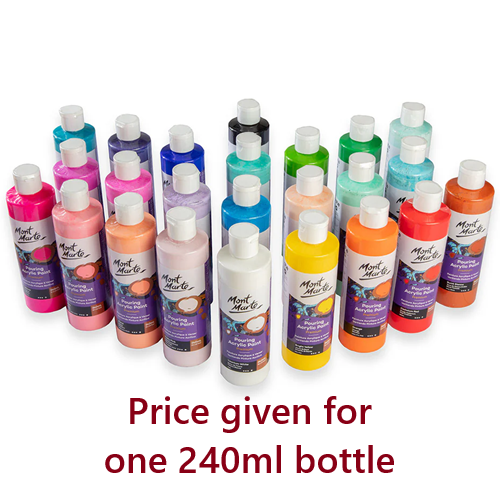
Acrylic pouring, also called fluid art, creates flowing, marble-like patterns without a brush. Every piece is unique, which makes it fun for beginners and experienced painters alike. This guide to acrylic pouring for beginners explains the paints and medium you need, how to get the right consistency, three easy techniques, and how to let your pour dry without problems.
What you need for acrylic pouring
- Ready-to-pour paint: Mont Marte Pouring Acrylic 240ml comes in eight colours, including Titanium White and Lamp Black, and Art Rangers Marble Effect Pouring Acrylic 100ml comes in five colours. No mixing needed.
- Pouring medium: Art Nation Pouring Medium 118ml mixes with ordinary acrylic paint for smooth, wet-look pours and helps reduce crazing (fine cracks).
- Silicone oil: FUJIN Artist Silicone Oil 100ml helps create “cells”, the round shapes many pourers love. A few drops are enough.
- Cups: a Small Silicone Pouring Cup with a spout, or the Split Pouring Cup to pour two colours at once.
- Surface: a primed canvas such as the Bomeijia Canvas 20 × 20cm. See our canvas guide.
- Extras: plastic cups, stirring sticks, gloves, a level and plenty of plastic sheet or newspaper.
Prices change, so see each product page for today’s price. Browse all acrylic colours and other artists’ materials.
Getting the right consistency
Pouring paint should flow like warm honey: it runs off a stick in a smooth stream and the line disappears back into the cup after a moment. Ready-to-pour paints are already at this consistency. If you use ordinary acrylic, mix it with pouring medium as the label directs, stirring slowly to avoid bubbles, and test a drop before pouring.
Three easy acrylic pouring techniques
- Flip cup: layer colours in one cup, place the canvas on top, flip both over together, then lift the cup and tilt the canvas so the paint spreads.
- Puddle pour: pour each colour into the centre, one inside the other, then tilt the canvas so the rings stretch outwards.
- Split cup: fill each side of a split cup with a different colour and pour across the canvas for flowing, twin-colour patterns.
How to do your first pour
- Cover your table and raise the canvas on four plastic cups so paint can drip off the edges.
- Check the surface is level.
- Prepare three or four colours, including white, which helps the other colours show.
- Add one or two drops of silicone oil to some colours if you want cells.
- Pour using one of the techniques above, then tilt slowly to cover the canvas and edges.
- Pop any bubbles with a toothpick.
- Leave the canvas flat, level and covered from dust while it dries.
Drying and finishing
- Pours are thick, so they take much longer to dry than normal acrylic paint. Leave them undisturbed for several days.
- Don’t move or tilt the canvas while it is wet, or the pattern will keep moving.
- Cracks can appear if the paint is too thick or dries too fast; pouring medium and a cool, shaded room help.
- Once fully dry, protect the surface with varnish. See our varnishing guide.
Frequently asked questions
Can I use normal acrylic paint for pouring?
Yes, if you mix it with pouring medium. Ready-to-pour paint is simpler for beginners.
How do I get cells in my pour?
Add a few drops of silicone oil to some of your colours. Using white and contrasting colours makes the cells easier to see.
Why did my pour crack?
Usually because the paint was too thick in places or dried too fast. Use pouring medium, pour evenly and dry the piece in a cool, shaded room.
Do you deliver islandwide?
Yes. We deliver across Sri Lanka in 2–5 working days, with cash on delivery, card or bank transfer. You can also visit our shops in Boralesgamuwa and Horana, open every day from 9 AM to 6 PM.
Not sure what to choose? WhatsApp the Haanz team on 0711 515 515 and we’ll help you choose colours and supplies for your first pour.
More Haanz Art Guides
 Die Cutting and Embossing for Beginners: Cards and ScrapbooksRead the guide →
 Resin Jewellery for Beginners: Pendants, Earrings and KeychainsRead the guide →
 Resin Bookmarks and Keychains: An Easy Guide for BeginnersRead the guide →
 Earth Colours Explained: Yellow Ochre, Sienna and UmberRead the guide →