

Acrylic Landscape Painting: Skies, Trees and Water for Beginners


Landscapes are a favourite subject for new painters: mountains, paddy fields, lakes and beaches are all around us in Sri Lanka. This guide to acrylic landscape painting explains how to plan a landscape, paint skies and clouds, trees and foliage, and water with reflections, plus simple tricks to create a sense of depth.
Plan your acrylic landscape painting
- Horizon: place it a third of the way up or down, not in the middle, for a more interesting picture.
- Paint back to front: start with the sky, then distant hills, then the middle ground, and finish with the foreground.
- Big to small: block in large areas with big brushes first; add details last with small brushes.
Painting skies and clouds
- Paint the sky with a large flat brush, darker blue at the top and lighter near the horizon, blending while wet.
- Let it dry.
- For clouds, dab white with a little blue or grey for the shadow side using a round brush or a dry fan brush, in soft, uneven shapes.
- Add a touch of pure white on the side facing the sun.
- Soften the cloud bottoms by brushing them lightly into the sky colour.
Painting trees and foliage
- Trunks and branches: use a small round brush and brown with a little blue; branches get thinner as they go up.
- Leaves: tap a fan brush loaded with dark green to make clusters, then lighter green on top where the light hits.
- Distant trees: paint them smaller, paler and bluer than trees in front.
- Natural greens: mix sap green with a touch of red, brown or yellow ochre. Pure tube green often looks artificial.
Painting water and reflections
- Paint water with horizontal strokes, using colours from the sky above it.
- Reflections sit directly below the object and are usually slightly darker and less detailed.
- Add a few thin horizontal lines of white or light blue to show ripples.
- Lighter water near the horizon and darker water near you adds depth.
Creating depth
- Things in the distance are paler, bluer and less detailed (aerial perspective).
- Overlap shapes: put hills in front of hills.
- Make the foreground darker and more detailed, with stronger colours.
- Objects get smaller as they go further away. See our perspective drawing basics.
A simple practice landscape
Try a small paddy field scene. Paint a pale blue sky, then soft blue-green hills along the horizon. Below them, paint the paddy fields in bands of yellow-green and bright green, getting larger and more detailed towards you. Add a line of coconut palms as dark silhouettes, a white egret or two, and finish with a few strokes of grass in the foreground with a fan brush.
Brushes and paints for landscapes
- Large flats for skies: Long Handle Flat Brush or Flash Flat Brush in bigger sizes.
- A fan brush for foliage and grass: Apple Fan Brush size 4. See our detail and fan brushes guide.
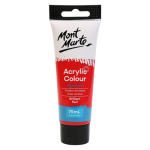
- Mont Marte Acrylic 75ml in Sap Green, Cerulean Blue, Titanium White and Burnt Umber.
- A canvas such as the Bomeijia Canvas 30 × 50cm, a good landscape shape.
Prices change, so see each product page for today’s price. Browse all paint brushes and canvases.
Frequently asked questions
Which colours do I need for landscapes?
White, a blue, a yellow, a red, a green and a brown cover most landscapes. Mix the rest.
How do I stop my landscape looking flat?
Make distant areas paler and bluer, and the foreground darker, warmer and more detailed.
Can I paint landscapes with a palette knife?
Yes. Knives are great for textured mountains, rocks and trees.
Do you deliver islandwide?
Yes. We deliver across Sri Lanka in 2–5 working days, with cash on delivery, card or bank transfer. You can also visit our shops in Boralesgamuwa and Horana, open every day from 9 AM to 6 PM.
Not sure what to choose? WhatsApp the Haanz team on 0711 515 515 and we’ll help you choose brushes and colours for landscapes.
More Haanz Art Guides
 UV Resin for Beginners: How to Use It and What You NeedRead the guide →
 Oil Colours for Beginners: Paints, Mediums and First StepsRead the guide →
 Your First Acrylic Painting on Canvas: A Simple Sunset, Step by StepRead the guide →
 Colour Mixing for Beginners: The Colour Wheel Made SimpleRead the guide →