

Mechanical Pencils, Leads, Sharpeners and Pencil Extenders

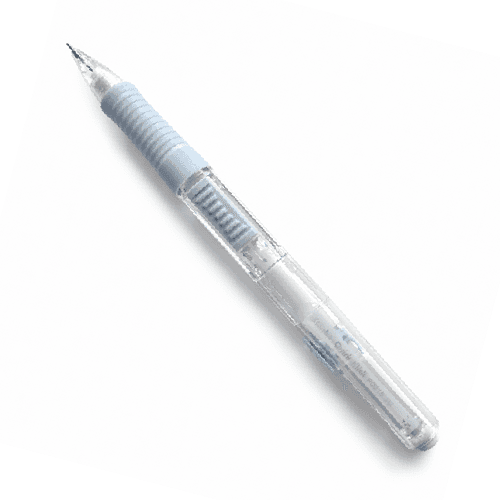
Wooden drawing pencils are only half of a student’s pencil case. This guide covers the tools around them: mechanical pencils and their refill leads, sharpeners for a clean point, and pencil extenders that let you use a good pencil right down to the stub. You will learn what lead sizes mean and which tools suit drawing, technical work and school.
Why use mechanical pencils?
- Always sharp: the lead stays the same thickness, so lines stay even without sharpening.
- Clean and precise: great for technical drawing, maths, small lettering and fine details.
- Less waste: you only replace the lead.
For shading large areas, wooden pencils in softer grades are still easier. Our pencil grades guide explains H, HB and B pencils.
Lead sizes for mechanical pencils
- 0.5mm: fine, precise lines for writing, technical drawing and detail. Fine leads break more easily, so use light pressure.
- 0.7mm: a little thicker and stronger; comfortable for everyday writing and sketching.
- 0.9mm: bold and sturdy, good for sketching and for students who press hard.
Always buy refills in the same size as your pencil. Lead grades work like wooden pencils: a softer lead such as 2B is darker than HB.
Mechanical pencils and leads we stock
- Pentel mechanical pencils (0.5mm): the everyday Pentel AL405N with an eraser cap, the Pentel Quick Click PD215N, which advances the lead with a side click so you don’t lift your hand, and the Pentel Mechanical Pencil 0.5.
- Pentel mechanical pencil (0.7mm): the Pentel Mechanical Pencil 0.7, with an eraser.
- Refill leads: Rotring 0.5mm (12 leads), Artline 0.7mm lead tube, Pentel 0.7mm 2B and Camlin 0.9mm (5 leads).
Sharpeners and pencil extenders
- Mont Marte Artist Sharpeners (metal, 2 pcs): metal sharpeners with sharp blades for drawing pencils.
- Student Sharpener and the Sharpener Set (2 pcs): compact sharpeners for the pencil case.
- Deli Crank Pencil Sharpener (DH 0027): a hand-crank desk sharpener with a shavings container.
- Dual Hole Pencil Extender and Nyoni Free Size Pencil Extender: hold short pencils so you can use them down to the stub.
Prices change, so see each product page for today’s price. Browse all mechanical pencils and leads and drawing pencils.
Getting a good point
- Turn the pencil, not the sharpener, with gentle pressure for an even point.
- Empty shavings regularly so the blade doesn’t clog.
- Keep separate sharpeners for graphite and colour pencils if you can; colour pencil wax can build up on the blade.
- For long, artist-style points, many artists expose the lead with a craft knife and shape it on fine sandpaper.
Using a pencil extender
When a good drawing pencil gets too short to hold, push it into the extender and tighten the grip. It makes the pencil long enough to control again, so you waste less of your favourite grades.
Erasers to go with them
Fine pencil lines need a fine eraser. A pen-style precision eraser, such as the Tombow MONO Zero (round tip), erases tiny areas without disturbing the lines around them, and a dust-free block eraser such as the Hauser Dust Free Eraser is handy for everyday corrections. Our guide to erasers for drawing explains each type.
Frequently asked questions
Can I use mechanical pencils for shading?
For small areas, yes, especially with a soft lead such as 2B. For large, smooth shading, a wooden pencil used on its side is easier.
Why does my 0.5mm lead keep breaking?
Usually too much lead is clicked out or too much pressure is used. Click out only a short length and press lightly.
Which mechanical pencil is good for school?
A 0.5mm or 0.7mm pencil with an eraser suits most school work. Students who press hard may prefer 0.7mm.
Do you deliver islandwide?
Yes. We deliver across Sri Lanka in 2–5 working days, with cash on delivery, card or bank transfer. You can also visit our shops in Boralesgamuwa and Horana, open every day from 9 AM to 6 PM.
Not sure what to choose? WhatsApp the Haanz team on 0711 515 515 and we’ll help you pick pencils and sharpeners for your work.
More Haanz Art Guides
 Oven-Bake Polymer Clay for Beginners: How to Start, Bake and FinishRead the guide →
 Air Dry Clay Projects: 8 Easy Ideas for Home and SchoolRead the guide →
 How to Choose an Easel: Studio, Portable and Display EaselsRead the guide →
 Botanical Watercolour: How to Paint Flowers and LeavesRead the guide →